
Blog
Why DeFi UX Is Still Broken (And Why It Matters)
Most people who try DeFi don't fail because of bad decisions. They fail because the tools make it too easy to make mistakes and too hard to know you're making them.
That is a UX problem. And it matters more than most people in the industry acknowledge.
Why DeFi Feels Complex
DeFi was built by engineers solving technical problems. The interfaces followed the architecture — not the user.
The result is a space where basic operations require switching between multiple apps, manually tracking which network you're on, interpreting raw transaction data before signing, and understanding concepts like gas, slippage and contract approvals before you can safely move a single token.
None of this complexity is inherent to what DeFi does. It is a product of how DeFi was built. The underlying protocols are powerful. The interfaces that expose them are often not.
Security vs Convenience Trade-Off
The common assumption is that better UX means weaker security. Simplify the interface and you hide information users need to stay safe. Make it easier and you make it less trustworthy.
This assumption does not have to be true.
Poor UX actively creates security risks. When interfaces show raw contract addresses instead of readable descriptions, users skip verification. When approval flows are confusing, users sign things they don't understand. When gas and fee information appears only after commitment, users proceed rather than reconsider.
Clarity is not the enemy of security. Confusion is.
Good UX means showing the right information at the right moment — not hiding it or overwhelming users with it. These are not competing goals.
Where Users Make Mistakes
The mistakes that cost people money in DeFi are consistent and predictable. Sending assets to the wrong network. Approving contracts without understanding what access they're granting. Missing slippage warnings until after a transaction executes. Misreading fee structures and paying more than expected.
These are not failures of intelligence. They are failures of interface design. The information needed to avoid them either wasn't shown, wasn't shown clearly, or wasn't shown at the right time.
When the same mistakes happen repeatedly across thousands of users, the problem is not the users.
Why Better UX Improves Safety
An interface that shows total costs upfront removes the surprise that causes poor decisions. A flow that explains what a contract approval grants reduces the chance of signing away unintended access. A network verification step before sending prevents an irreversible error before it happens.
Better UX does not remove your control. It gives you the information you need to actually exercise it.
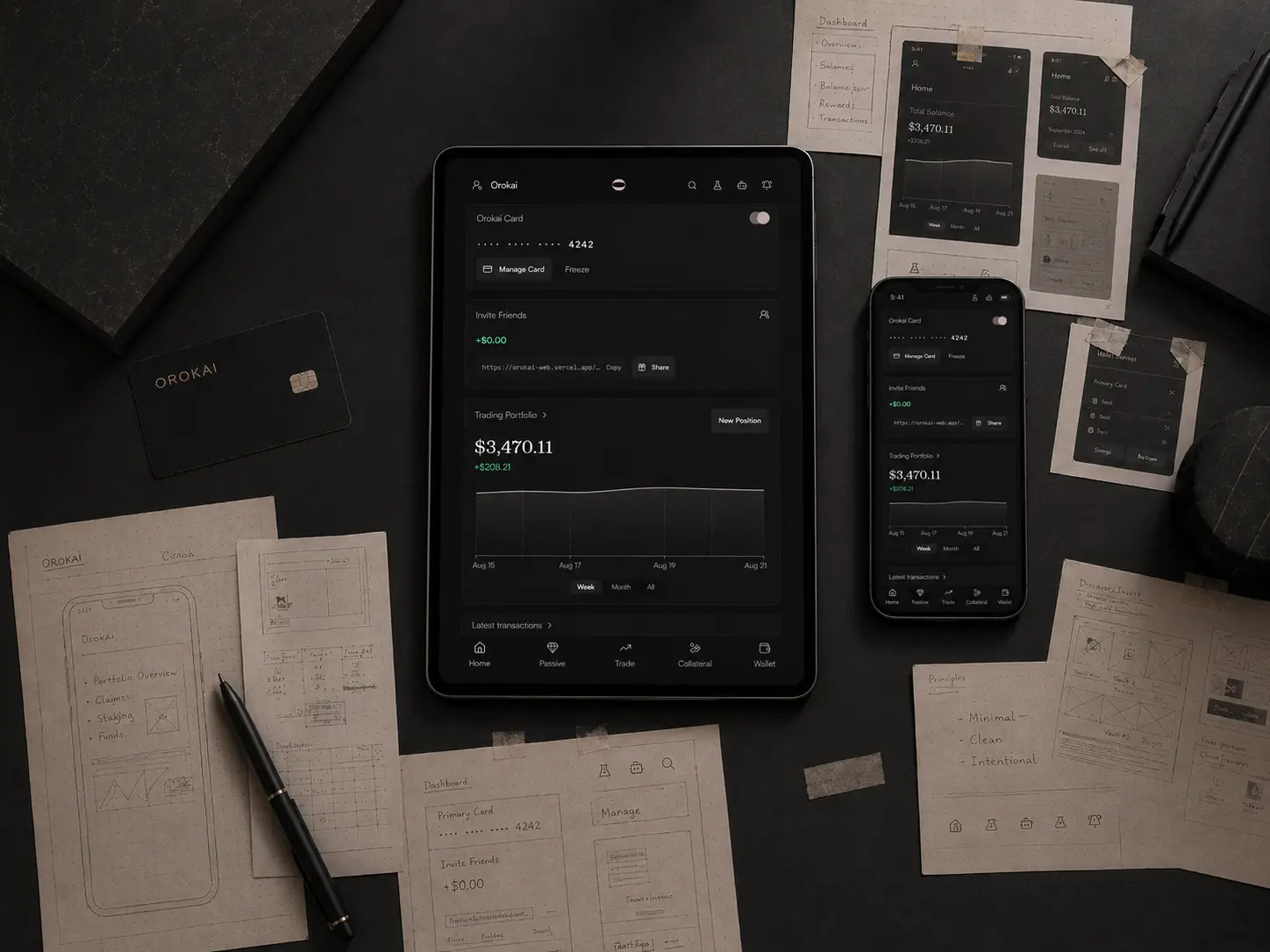
That is what Orokai is building toward — processes that surface the right context at every step, so your decisions are informed rather than blind.
What This Means for You
If DeFi has felt too complicated, that is not a reflection of your ability. It is a reflection of where the industry currently is.
Better tools exist. More are being built. And the gap between what DeFi can offer and what most people can actually access is closing.
You don't need to master the complexity. You need interfaces that handle it for you — while keeping you in control.
FAQ: Why DeFi UX Is Still Broken (And Why It Matters)
Why is DeFi so difficult to use for beginners?
DeFi interfaces were designed around technical architecture rather than user behavior. Basic operations often require managing multiple apps, interpreting raw transaction data, and understanding gas and slippage — knowledge most users don't have when they start. The complexity is a product of how the tools were built, not how DeFi itself has to work.
Does simplifying DeFi interfaces make them less secure?
Not if done correctly. Poor UX is itself a security risk — confusing approval flows, hidden fees, and unreadable contract addresses cause users to skip verification and sign transactions they don't fully understand. Showing the right information clearly, at the right moment, improves both usability and safety at the same time.